Introduction to Philosophy
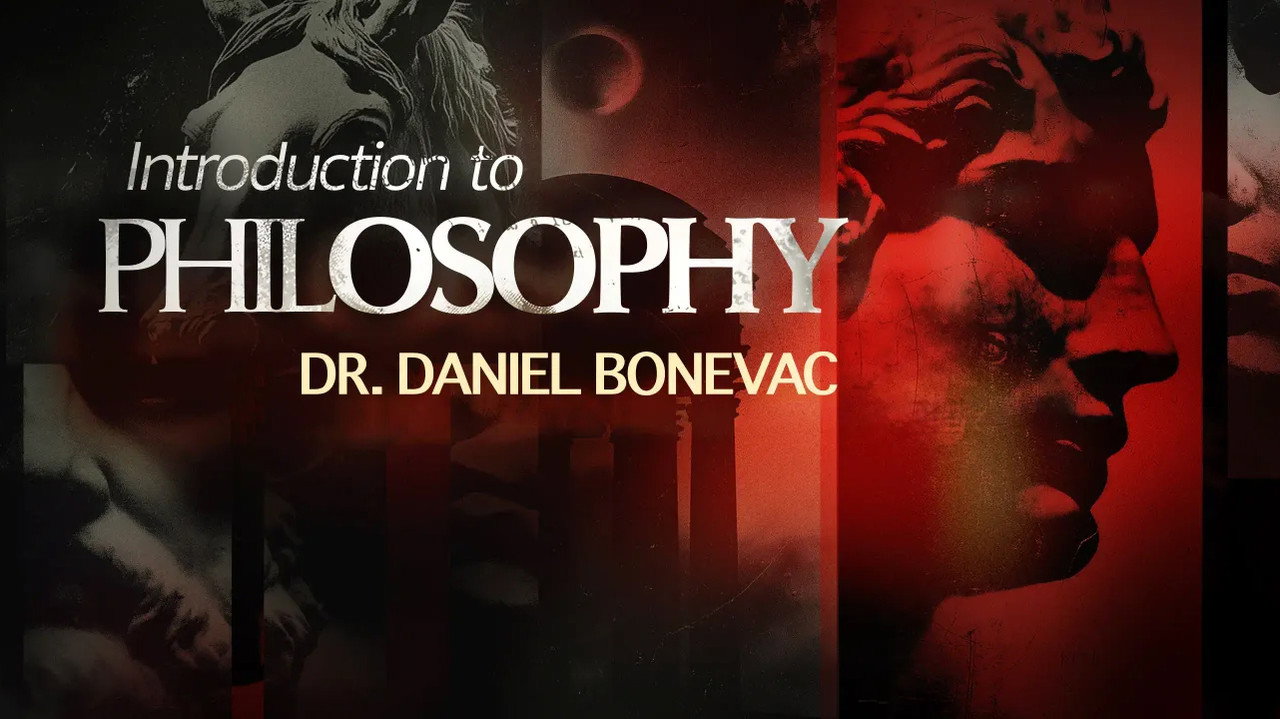
In Introduction to Philosophy, a nine-hour course, Dr. Bonevac guides us through the major traditions of Western philosophy in eight engaging lectures on ethics, metaphysics, and epistemology. We explore three key ethical frameworks—virtue ethics, deontology, and consequentialism—before tackling fundamental questions about reality, from realism to idealism. The course then examines theories of knowledge, weighing skepticism’s doubt, rationalism’s innate ideas, and empiricism’s reliance on experience. Finally, we consider how these philosophical traditions continue to shape debates about morality, reality, and human understanding today.
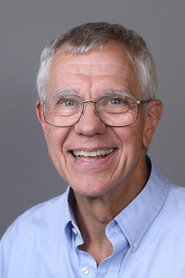
Cast: Dr. Daniel Bonevac
Course 1
8 episodes
- 1. On VirtueIn our introductory lecture, Dr. Bonevac explores the foundations of ethics through virtue theory, drawing on Confucius, Socrates, Plato, and Aristotle to examine what it means to live a good life and cultivate good character. We address three central questions—what kind of person to be, what to do, and how to decide—while discussing virtue as a mean between extremes, the unity of virtues, weakness of will, and the role of habit in developing virtue. The lecture concludes by considering how virtues may instead be complex combinations of simpler traits rather than strict means between extremes.CC1 h 1 minJan 16, 2026
- 2. On DeontologyIn lecture two, we turn to deontological ethics, which emphasizes moral principles and rules for action rather than character traits. We consider a range of approaches—from Abelard’s focus on intentions and Aquinas’s natural law grounded in human flourishing, to ethical intuitionism with its plural moral principles, and Haidt’s five-dimensional moral foundations theory. The lecture builds to Kant’s landmark categorical imperative, challenging us to act only on maxims we could will as universal laws and to treat humanity always as an end, never merely as a means.CC1 h 15 minJan 16, 2026
- 3. On ConsequentialismIn lecture three, we explore consequentialist ethics, focusing on utilitarianism as developed by Jeremy Bentham and John Stuart Mill. We examine how actions are judged by their outcomes rather than intentions or character, considering key concepts like the principle of utility, the felicific calculus, interpersonal comparisons, and Mill’s distinction between higher and lower pleasures. Dr. Bonevac also addresses practical challenges and objections—such as conflicts with rights and calculation difficulties—while highlighting utilitarianism’s systematic, consequence-based approach to resolving moral dilemmas.CC1 h 6 minJan 16, 2026
- 4. On RealismIn lecture four, we learn about realism in Western philosophy through the contrasting views of Plato and Aristotle. We examine Plato’s theory of Forms, where abstract universals like justice or triangularity are the true realities and physical objects are mere shadows, and contrast this with Aristotle’s view that individual substances, like particular humans or horses, constitute reality. The lecture concludes with Aristotle’s analysis of substance, including essential and accidental properties, highlighting how these two approaches offer radically different ways of understanding reality.CC1 h 5 minJan 16, 2026
- 5. On SkepticismIn lecture five, we encounter the philosophical tradition of skepticism, examining arguments that challenge our ability to know anything or have reasonable beliefs, from ancient Greek and Chinese philosophers to modern thinkers. We analyze five main skeptical arguments—illusion, comparison, variability, the problem of the criterion, and logical paradoxes about truth and knowledge. Our discussion concludes by considering the skeptical recommendation to suspend judgment for peace of mind, while noting the fascinating self-referential problem that skeptics cannot assert even their own conclusions without contradicting their position.CC1 h 3 minJan 16, 2026
- 6. On RationalismIn lecture six, we investigate the rationalist tradition, tracing its roots from Plato to modern thinkers like Descartes and Leibniz. We focus on how rationalists respond to skepticism, arguing that knowledge can be gained independently of experience through innate ideas and a priori truths. We examine Descartes’ “cogito ergo sum” and mind-body dualism, as well as Leibniz’s analytic and synthetic distinctions and his defense of synthetic a priori knowledge. Our discussion concludes by highlighting the fundamental disagreement between rationalists and empiricists about whether all knowledge comes from experience or whether the mind contributes its own innate structures to organize and understand reality.CC1 h 0 minJan 16, 2026
- 7. On EmpiricismIn lecture seven, we study empiricism through John Locke and David Hume, who follow Aristotle in arguing that all knowledge comes from experience rather than innate ideas. We trace how they break complex ideas into simple impressions, yet reach different conclusions about causation, substance, and identity. The lecture concludes with Hume’s radical skepticism, demonstrating how many core concepts—including causation, the self, and morality—may be mere psychological projections rather than features of objective reality.CC1 h 7 minJan 16, 2026
- 8. On IdealismIn lecture eight, Dr. Bonevac delves into idealism, the philosophical view that everything is mind-dependent, contrasting it with realism which holds that some things exist independently of the mind. We explore how Kant's transcendental idealism distinguishes between phenomena and noumena, examining how this perspective influenced later thinkers like Hegel, who rejected the notion of unknowable things-in-themselves. The lecture concludes by considering pragmatism's response to idealism, Nietzsche's radical relativism, and Russell's realist objection that idealism cannot explain why different minds share similar experiences of the world.CC1 h 15 minJan 16, 2026
Viewers also watched



Introduction to Philosophy
In Introduction to Philosophy, a nine-hour course, Dr. Bonevac guides us through the major traditions of Western philosophy in eight engaging lectures on ethics, metaphysics, and epistemology. We explore three key ethical frameworks—virtue ethics, deontology, and consequentialism—before tackling fundamental questions about reality, from realism to idealism. The course then examines theories of knowledge, weighing skepticism’s doubt, rationalism’s innate ideas, and empiricism’s reliance on experience. Finally, we consider how these philosophical traditions continue to shape debates about morality, reality, and human understanding today.
Creators and cast
- Created by
- Dr. Daniel Bonevac
- Studio
- Peterson Academy
Maturity rating
Not yet rated.
Audio languages
English
Where to watch
Not currently listed on any streaming, rental or purchase service.