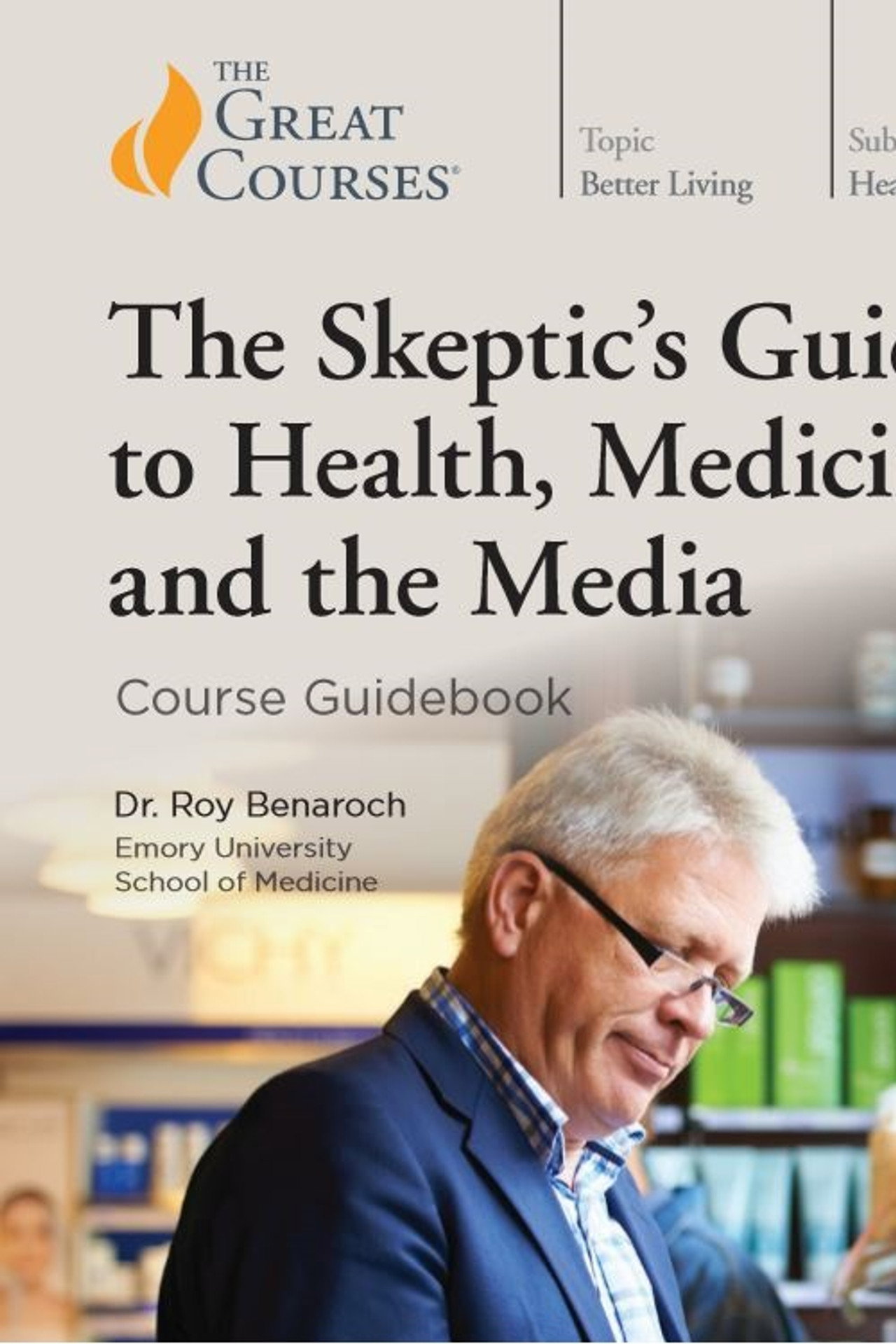
The Skeptic's Guide to Health, Medicine, and the Media
If you’ve ever sneezed while driving your car, did you immediately think, “Cars Cause the Common Cold!”? No, of course not. A headline like that wouldn’t make any sense. And yet, some of the sources we rely on for health and medical news are not much better. Many media outlets are perfectly happy to grab us with a wacky headline or an article that reflects none of the nuance of the study on which it’s based—as long as we buy the magazine or click through to the article. And we do. We take the bait. With 50,000 scientific studies published each week in English, many media outlets don’t put in the time and effort to adequately decipher and report on even a tiny fraction of those studies. But they publish news about them, anyway.
Season 1
24 episodes
- 1. Hormone Replacement TherapyFor decades, the pharmaceutical industry and the press praised hormone replacement therapy as a panacea for menopausal symptoms and women's long-term health. But that all came to a screeching halt in 2002. Discover what the scientific studies that caused this sudden turnaround really said. And are men falling prey today to the same marketing tactics regarding testosterone?CCSep 2, 2018
- 2. Concussions and the Future of FootballWhat happens to billions of neurons when the gelatinous brain slams into the side of the hard skull? While the media has focused some attention on high-profile cases of concussion and Chronic Traumatic Encephalopathy, learn how selective reporting can lull us into believing an issue has been adequately addressed when that is far from the truth—and lives are at stake.CCSep 9, 2018
- 3. New Drugs on the BlockIs prescription drug “X” a wonder drug or a disastrous failure? It can be almost impossible to answer that question based on what’s presented in the press. Using two drugs as case studies, you’ll learn how to better understand and evaluate the media description of prescription drugs, and why institutional changes regarding data availability can make all the difference.CCSep 16, 2018
- 4. Is It Time for Medical Marijuana?By examining the story of marijuana and our changing perceptions of its safety and usefulness, you'll learn how different stakeholders can affect media coverage, drive social change, and influence legislation. Given that the medical use of cannabis in the United States has not been driven by well-designed scientific studies, how can we best interpret the news reports addressing its efficacy and safety?CCSep 23, 2018
- 5. The Media and Weight LossThe media focus on weight loss comes as no surprise. With two of every three Americans being overweight, we certainly need sound nutrition and weight-loss advice based on solid science. But is that what we’re getting? Learn how to read beneath the hyperbole-filled headlines—“Fats are Bad!”; “Fats are Good!”—to determine if an article’s content is really salient to your own health.CCSep 30, 2018
- 6. Alternative Medicine in the NewsMillions of Americans every year turn to alternative-medicine approaches that have never been rigorously studied or have even been disproven. Learn why fish oil supplements are a $1.2-billion industry, despite research that shows no health benefit from their use, and why individuals continue to turn to stem cell infusions" despite sometimes dire consequences."CCOct 7, 2018
- 7. The Media's Take on Mental HealthWhile mentally ill individuals are more likely to become victims of crime than to be violent perpetrators, their depiction in TV and film has skewed our perceptions of the risk they pose to society. The Associated Press has recently encouraged journalists to cover these issues more fairly and accurately. But as you'll discover by looking at related news articles, we still have a long way to go.CCOct 14, 2018
- 8. The Media and the InternetYou’d never believe people who told you they lived off air only, never eating. Yet one “Breatharian” couple received widespread media coverage on the internet, broadcast sites, and in print. Why are we so gullible? Learn how to think like a skeptic when reading news in any medium, remembering that while internet “clickbait” races continue to be faster and faster, real science is slow and steady.CCOct 21, 2018
- 9. We Share Our World with ToxinsWhile toxins are around us all the time and require a nuanced, sophisticated approach to understand, short and memorable headlines sell. Follow the fascinating media coverage of baby-food toxins and the new water system in Flint, MI, to discover the reasons for conflicting headlines and stories. Who got it right? And who got it so very wrong?CCOct 28, 2018
- 10. Are Coffee and Wine Good for Your Heart?Learn why accurate reporting on the relationships between coffee, wine, and cardiovascular health—the number one cause of death in the United States—requires an understanding of real clinical endpoints as well as a desire to clearly explain the complicated answer to a seemingly simple question: Is this good for me or bad for me? With its ups and downs and missteps, the history of reporting on these topics is fascinating.CCNov 4, 2018
- 11. Life Expectancy and Infant MortalityWhy is life expectancy in the United States decreasing and infant mortality so high compared to other industrialized nations? Take a captivating look behind the scenes at the debate between scientists fighting for their individual points of view. Does the media explain the statistics behind their competing theories? If not, who suffers from the oversimplification of a “clickbait” headline?CCNov 11, 2018
- 12. Is It Really OK to Stop Flossing?You might have seen a headline recently stating that flossing your teeth is a complete waste of time, or might have read that new guidelines mean your blood pressure might be high. But did you also read that many doctors do not agree with those changes? Probably not. Learn why health recommendations can suddenly change and how to determine if those changes apply to you.CCNov 18, 2018
- 13. Does Cancer Screening WorkWe’ve all seen the stories about a cancer survivor whose life was saved by early screening—heart-warming stories that can make us want to run out and take every early-warning test in sight. But cancer screening is full of complexities that rarely make the news. Learn about the very real dangers of overdiagnosing, and how to determine which screenings are important for you.CCNov 25, 2018
- 14. Drug Prices in the NewsIn an ideal world, all medications would be available and affordable to those who need them. But the minutiae of prescription drug pricing can create a significant barrier. Learn about the unique role of the pharmacy benefit manager, how pharmaceutical companies work to keep generics out of the marketplace, and the ways in which gifts given by drug reps still influence doctors' prescribing habits.CCDec 2, 2018
- 15. Selling DiseaseDiscover how drug companies sometimes develop a drug first, and only then identify a disease the drug can address—think restless legs syndrome or chronic dry eye. Is the media helping us focus on our biggest health challenges, or pulling our attention over to the newest problems, problems potentially driven by pharmaceutical marketing?CCDec 9, 2018
- 16. The Opioid CrisisOpioids had been around for a century before exploding into the crisis we have today. But the cause of the current crisis is not as simple as the story we often hear—greedy drug companies pushing greedy doctors to overprescribe. Learn what the most common cause of opioid death is today, and the role the news media can play with respect to educating families and creating pressure for policy change.CCDec 16, 2018
- 17. Infections in the HeadlinesWhile the media has played an important role in educating the public about hygiene and the avoidance of disease, it has also been known to spread false rumors resulting in very real health consequences. Learn what the media got right and wrong in covering the recent outbreaks of Ebola and influenza. And our own take away? If we don't have time to read the full article, we shouldn't be skimming the headlines.CCDec 23, 2018
- 18. Heath Risks in Our EnvironmentDoes your cell phone increase your risk for cancer? Does it really matter whether or not you use your seatbelt? Using your “Skeptic’s Toolkit,” learn how to examine the research that supports or (or doesn’t) the “risk” headlines to then make appropriate choices for you and your family. Exaggerating a risk might make for good “clickbait,” but it can lead to unnecessary fears and poor decision-making.CCDec 30, 2018
- 19. Bad ScienceWhen doctors tragically rely on fraudulent or shoddy science published in reputable medical journals, patients can suffer. Even worse, explore the dark side of medical publishing, in which for-profit “journals” with worthy sounding titles publish trash articles reviewed by no one. When researchers’ work can be published for a fee, who really pays the price?CCJan 6, 2019
- 20. Diet, Health, and the Power of WordsFrom “superfood” to “pink slime” to acai, the media exerts a powerful effect on our concepts of food, diet, and health. Learn how to differentiate between nutrition-related scientific statements and marketing statements. When does the desire to eat whole, healthy foods become an unhealthy obsession? What role does the media play in influencing those choices?CCJan 13, 2019
- 21. Genetics and the MediaNew information about the influence of our genes is released every day—but how does the press respond? With the example of genetic effects on obesity, you’ll discover how two antithetical headlines can result from the same scientific report. These overblown and overly simplistic headlines might attract readers, but they can muddy the waters of these complicated issues and even make readers skeptical of science itself.CCJan 20, 2019
- 22. How to Stay YoungProfessor Benaroch will lead you through the exercise of finding solid, credible answers to a question on all of our minds: What's the best way to stay young and healthy? He'll illustrate how the skeptic's tools you've learned to use when reading or viewing media reports will help you answer this or any other health question. You'll be surprised where the research takes you!CCJan 27, 2019
- 23. Cures for the Common ColdUse your “Skeptic’s Toolkit” to discover how to best address the common cold. What’s your best choice: Echinacea, good old chicken soup, vitamin C, vitamin D, or zinc? Will any of these options cure the cold or get rid of it faster than a placebo? You’ll find your answer by remembering that good journalism provides an honest headline followed immediately by solid facts and an accurate summary of the appropriate studies.CCFeb 3, 2019
- 24. The Media's Role in Improving HealthDiscover the positive role the popular media played in encouraging us to put our cigarettes down, our seatbelts on, and not mix drinking and driving. This is media at its best, working creatively and effectively in the interest of public health. What issues could the media address today to positively impact our public health?CCFeb 10, 2019
The Skeptic's Guide to Health, Medicine, and the Media
If you’ve ever sneezed while driving your car, did you immediately think, “Cars Cause the Common Cold!”? No, of course not. A headline like that wouldn’t make any sense. And yet, some of the sources we rely on for health and medical news are not much better. Many media outlets are perfectly happy to grab us with a wacky headline or an article that reflects none of the nuance of the study on which it’s based—as long as we buy the magazine or click through to the article. And we do. We take the bait. With 50,000 scientific studies published each week in English, many media outlets don’t put in the time and effort to adequately decipher and report on even a tiny fraction of those studies. But they publish news about them, anyway.
Maturity rating
Not yet rated.
Where to watch
Stream

Buy

Services worldwide · data by JustWatch
Details and artwork from TMDB. Availability from JustWatch and can change without notice.